

New to indoor rowing?
On this page we've broken down indoor rowing's main features for you, with a few suggestions for interesting ways you can use it to add value in school. Follow the links in each section for more detail on a specific topic.
Every Child Matters
Can you use indoor rowing to enhance your Every Child Matters provision? Because indoor rowing engages such a wide range of young people in so many ways, you can easily tailor it to complement your other activities.
Be healthy
It can be a catalyst for teaching about, and taking part in, a healthy lifestyle, as well as being a fun and inclusive activity.
Stay safe
It's an inherently safe activity, and participants stay in one place, so they're easy to keep track of.
Enjoy and achieve
You'll see lots of smiles, we promise.
Make a positive contribution
Indoor rowing lends itself easily to sponsored fundraising. Older children can coach and help younger ones, and junior leader qualifications are available from British Rowing.
Achieve economic well-being
Happy, engaged children have a better chance of economic well-being, and we want to do our little bit to help. Oh, and did we mention those smiles?
Competition
Intra-school
Indoor rowing is ideally suited to intra-school events. You can easily project races onto a screen, or even the wall, with competitors' names up in lights, which really appeals to kids and adults alike. Machines are simple to wire together for larger races, and you can even set up an ad hoc wireless race between up to eight machines.
You can also link several machines together to act as one boat. With eight machines you could race two teams of four (you'll see just two boats racing) or four teams of two (four boats racing). Each team member's score goes into the pot, so slower pupils can take part and compete on an equal footing without standing out, which is perfect for house competitions.
Inter-school
The Schools Indoor Rowing League is a national schools competition you can take part in without the hassle of leaving school. Pupils row the test in school and you enter the results online, where they're benchmarked against schools across the country.
Of course, you could also set up your own leagues or inter-school competitions. There are examples around the country of almost every format you can think of, from one-off challenges and team races to individual events and year-long competitions, so give us a call for advice and ideas.
Personal
Even the least competitive people enjoy trying to beat their own past efforts. The Concept2 Performance Monitor gives instant feedback on how you're doing in a variety of ways, even calories burned, and it stores your workouts so you can see your progress over time. So even if you don't want anyone else to see what you're doing, you can still get the most from your indoor rowing.
Get creative
Use the indoor rower as a catalyst. You can row to music, make documentary or technical films about indoor rowing, or design new software or training programmes. Oh, and get fit while you're doing it!
Fundraising
There are many ways to use the indoor rower to raise funds for your school or a chosen charity. The most common are a one-off event, or a target distance over a period of time. Then you just have to get people to sponsor you, and pay up!
Participation and inclusion
Indoor rowing is one activity that appeals to a wide range of hard-to-reach groups.
A story we hear again and again, all round the country, is of Key Stage 4 girls who were completely disengaged from traditional PE but found indoor rowing and really enjoyed it, which increased their activity levels and attendance. For pupils who don't play ball games and don't like running sports, it's an enjoyable activity that's indoors and sitting down, while still being physically challenging, and one where they can often compete with and beat the usual suspects.
Physically disabled pupils can take part using the same equipment as their mainstream peers, and for pupils carrying extra weight it's an activity where that weight isn't such a disadvantage. The stories we hear of increased self-esteem and confidence are heart-warming.
Achieve your targets
The Concept2 Performance Monitor is a powerful tool that gives consistent and reliable data, both for the rower and for the teacher. That makes it an excellent way to evaluate performance over time and to measure progress towards your healthy schools and PSHE targets. See "Evaluating and improving performance" further down this page.
Racing
National competitions
There's a long history of competition in the indoor rowing world. The British Indoor Rowing Championships are among the largest in the world, with individual and team events for ages 10 and above. The National Junior Indoor Rowing Championships are run by London Youth Rowing and attract entries from all over the UK, and the English, Irish, Welsh and Scottish national races all have junior sections.
Wirelessly
It's really easy to set up an ad hoc wireless race with up to eight Concept2 indoor rowers. All you need is a monitor that supports wireless racing and some willing racers, and 30 seconds later you're away.
Racers get a countdown to the start, and while they race they can see where they stand, how far they are ahead of or behind their rivals and how the finish plays out. This kind of on-screen action appeals to lots of kids, who will often have several attempts given half a chance.
Projected on the wall
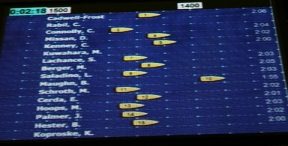
This is known as venue racing, and the race software to run it is a free download from Concept2. The machines need to be wired together, which is straightforward, and once they are, all you need is a laptop with the software and a projector to have a race up and running in five minutes.
You can then run team races, individual sprints or even a league round up on the big screen, which adds another dimension to the whole event and can make quite a spectacle.
Partnership-wide
Why not run your own indoor rowing challenge across a group of schools? You could run it as a virtual race, with each team posting its results, or as a live event where several schools meet at one venue and do battle there. Some groups of schools use junior leaders rather than staff to run their events, which adds an extra dimension and gives everyone involved more ownership.
Why not get cross-curricular and ask your ICT department whether you can link up different locations during a race? One school had a video link around the school intranet and live commentary on the races.
Rewards
Everyone likes to be rewarded for their efforts. Our distance award schemes recognise persistence and achievement rather than out-and-out performance, and there are two levels:
- Junior scheme: launched mainly for Key Stage 2 and SEN pupils, although anyone can use it to get started. Free certificates are available to download, which start easily and lead pupils on towards the youth scheme.
- Youth scheme: pupils log their distances as they row, and receive certificates or medals as they pass each qualifying distance.
Pupils can carry on with the scheme after they leave school, which gives them an incentive to keep exercising into adulthood.
SEN
If you're looking for an activity that helps bring pupils out of their shells, improves their health and wellbeing and introduces them to a sport they can take with them through life, indoor rowing should be on your list.
Children with a wide spectrum of physical disabilities, including wheelchair users, can enjoy the health benefits of indoor rowing using adaptive seating, and there's software to help pupils with visual impairments.
Children with a wide range of learning difficulties can also benefit from a safe, closed activity that adjusts to their level. For some, just developing arm strength is useful, while for others it's coordination. For mild learning difficulties the ICT and data-gathering side is useful: one school found that having pupils' own data to work with in Excel, without having to type it in by hand, made the children more interested (because it related directly to them), and they'd exercised while gathering the numbers too. There's more on our special educational needs page.
Become a champion
Let's face it, there aren't as many people doing indoor rowing as there are playing football, yet. That means your pupils have a real chance of becoming a national champion, and imagine what that could do for their self-esteem and confidence.
Evaluating and improving performance
There are a variety of ways to monitor and evaluate progress with the Concept2 indoor rower. The vital component is the Performance Monitor, which captures accurate and reliable data from every workout, and there are several ways to get at those numbers:
- They're stored on the monitor itself, so after a session you can review them and write down what you did.
- The free Concept2 Utility software downloads workouts to a computer.
- RowPro is third-party software (it needs a paid subscription) with several useful features: it collects data from workouts and displays it graphically, and you can even race others live over the internet.
- You could even create your own data capture and recording program using Concept2's free software development tools.
Concept2's software support page has the Utility and the development tools. All of this can be useful evidence for school self-evaluation and for assessing your pupils' fitness.
Weight management
Indoor rowing exercises all the major muscle groups, which makes it well suited to people who want to maintain their weight or lose excess weight, and it improves cardiovascular health at the same time.
It also often appeals to people carrying extra weight, both because it's low impact and because larger people can have a mechanical advantage, which gives confidence and motivation to people who may not be natural exercisers.
The instant, reliable feedback from the Performance Monitor also helps with motivation over long periods. If you can see improvements happening in front of your eyes, you're probably more likely to keep exercising.
Acquiring and developing skills
Despite looking easy when the professionals do it, there's more to indoor rowing technique than meets the eye. It's easy to get started if you're new to the sport, but there are several new coordination skills to hone in order to get better scores. Pupils soon learn the difference between stroke rate and power and how to develop rhythm, and if they're taught good technique they'll discover for themselves how important timing and coordination are.
If you introduce team relays, as in the league, then teamwork and race planning come into the mix too. For pupils who push themselves for better and better scores, many elements of physiology, such as the cardiovascular system, become much more noticeable, which opens the way to illustrating the training effect.
Cross-curricular links
Accurate, accessible data means you can use the rower to generate numbers for Maths, Science and ICT. Because the numbers are the pupils' own, they tend to take more ownership of them and are often more interested in the work you're asking them to do.
Use the Concept2 indoor rower to enhance science lessons. You could use accurate data gathered from the pupils themselves to show how heart rate changes with exercise, or use the rower to explore topics such as homeostasis, movement and respiration. Power is shown in watts and work done is recorded in calories, both of which help develop skills in obtaining and analysing evidence.
ICT
The Performance Monitor can share its data with a computer, making everything the rower generates available to use live. Don't be put off if that sounds too technical: it's a powerful tool, but it starts at a pretty basic level. You could design a new user interface, for example, or capture and record data automatically, which is great for ICT or Maths projects.
You could also use workout records in school to track the work pupils do on the rower for PSHE, or use pupils' own data in Maths or Science lessons, drawing cross-curricular links and giving them ownership of the results.
Play games
Go fishing!
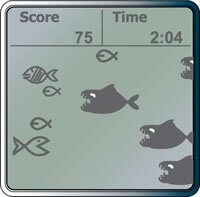
Not everyone sees the point of physical activity for its own sake, so how do we get kids active when exercise is a complete turn-off?
Built into the Performance Monitor is a clever little game called the Fish Game. It lasts four minutes, it's great fun, and it's about winning points rather than covering a distance. For the games console generation it's a nice introduction to fun physical activity: it's short, you don't have to work too hard, and it gives instant rewards and feedback.
You could even hold a Fish Game league, or persuade your technology fans to design another game themselves.
Darts
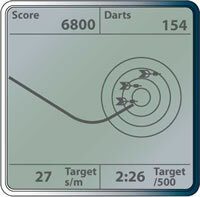
The monitor also has a Darts game, which rewards consistent stroke rate and power output. You get 300 darts to throw in a game, and your score is worked out just like in a real game of darts. Whether you're a new rower learning to be consistent or an experienced rower getting comfortable at a new pace, Darts is a terrific tool.
Games in lessons
Our games ideas and teacher resources include a number of games and challenges for your pupils, designed by teachers and school sport staff to teach specific skills such as teamwork, the basics of race planning and technique. You can use them anywhere they suit, from the classroom to an indoor rowing club.
There's nothing to stop you coming up with your own games or developing ours, and in fact that's what they're there for. A good chunk of our teacher training course is spent passing on experience of how best to use these games to achieve your aims.
Teach skills with games
At the risk of teaching you to suck eggs, children are designed to learn through play. Our resources offer a number of games and challenges that teach good basic technique for indoor rowing, while others bring cross-curricular aspects into PE or introduce tactics, teamwork and the basics of race planning, which go far beyond indoor rowing.
Easily run events
You can easily set up an event at school using indoor rowing, and people love to see the race projected onto the wall with their name up in lights. The software you need is free and pretty easy to use, the monitors are easy to wire up, and most schools have a laptop and projector.
You can run individual or team events, inter- or intra-school, for fun or for fundraising, and the possibilities are endless. Why not set up your own school league or house competition? Birmingham and Nottingham, for example, have both run schools indoor rowing championships with heats through the year and big finals, and junior leaders have even run the events, which adds yet another dimension.
Lessons
The league's lesson plans and our teacher resources give you schemes of work and lesson plans to get you started delivering indoor rowing in the curriculum, with plenty of hints and ideas in a teacher-friendly format, written by teachers for teachers.
PE, school sport and club links
PE
Indoor rowing is a great way to engage pupils who are disaffected with PE for whatever reason. You can use it at GCSE and above or with younger children, for competition or for PSHE, and the range of possibilities is huge.
School sport
For school sport, the Schools Indoor Rowing League is a great way to compete against other schools without travelling. Racing is easy to organise within classes, within your school or between schools.
Club links
The obvious club link from indoor rowing is rowing on the water, but don't be fooled, because indoor rowing plays a part in many other sports. Sailing, rugby, triathlon and canoeing all use Concept2 machines, and indoor rowing gives a good base of fitness for anyone moving into those sports, along with the confidence of knowing their way around the indoor rower. And don't forget that the vast majority of gyms and fitness centres in the UK have Concept2 rowers.
Engage
Indoor rowing appeals to a wide range of hard-to-reach groups, such as Black and minority ethnic groups, Key Stage 4 girls, SEN pupils and other disaffected groups.
For pupils who are overweight or obese, indoor rowing is an activity that can be tailored to each person's needs. It exercises all the major muscle groups, so it's very time-efficient, it gives instant and accurate feedback on progress, and workout results can be saved to a computer.
When it comes to self-esteem and confidence, indoor rowing can encourage kids who don't see themselves as sporty. Larger, less coordinated children often have a mechanical advantage over their peers and can achieve sporting success for the first time in their lives, and the knock-on effects can be remarkable. SEN pupils, too, can take part using the same equipment as their mainstream peers, and sometimes achieve outstanding results.
Community use
Indoor rowing is ideal for community use of your school, since it appeals to children and adults alike, is easy to set up and is open to almost anyone. It works for activities such as Crew Class (group rowing to music), and you could try after-school mothers and daughters sessions as part of your menu of activities.
Extra-curricular clubs
Breakfast, lunchtime and after-school clubs are all out there. Some are competitive affairs, while others have a more informal, drop-in feel, but however you want to run your clubs, indoor rowing can be part or all of what you do.
Combined with motivators like the Schools Indoor Rowing League and the distance award schemes, indoor rowing can be a powerful way to get your school more active.
Workforce health
Don't forget that your staff need to stay fit and healthy too, so why not start an after-school indoor rowing club for staff?
Get trained
Teacher training is designed to help teachers who are new to indoor rowing answer the question of how and why they should bother with it. We've put a lot of work into giving you a head start and limiting the extra work you have to do, so you can achieve your aims as quickly as possible.
You'll find out how to engage a whole class with fewer machines than pupils, how to teach good basic technique and how to set up a race and project it onto a screen, and hopefully you'll leave the course inspired. We also run instructor courses, for anyone who wants to teach newcomers good basic technique, and courses in Crew Class.
British Rowing runs coaching courses too, and the details are on the British Rowing website.
Key Stage 2
The Concept2 indoor rower is clever: it only gives resistance relative to the amount of work you put in. If you don't pull very hard there isn't much resistance, and you don't have to adjust anything for that to happen.
That means even younger pupils can use the indoor rower safely to learn and develop new skills. It's a way of showing them that there are other ways to keep fit and healthy besides ball sports and running, which helps them enjoy physical activity in general.
As you know, every child is different, with different needs and rates of development. We don't recommend using indoor rowing for training, as opposed to general exercise and skill development, until a child is physically and emotionally ready. It's up to you to decide when that is, but as a guide, our experience is that Key Stage 2 children can generally benefit from and enjoy indoor rowing in complete safety.